
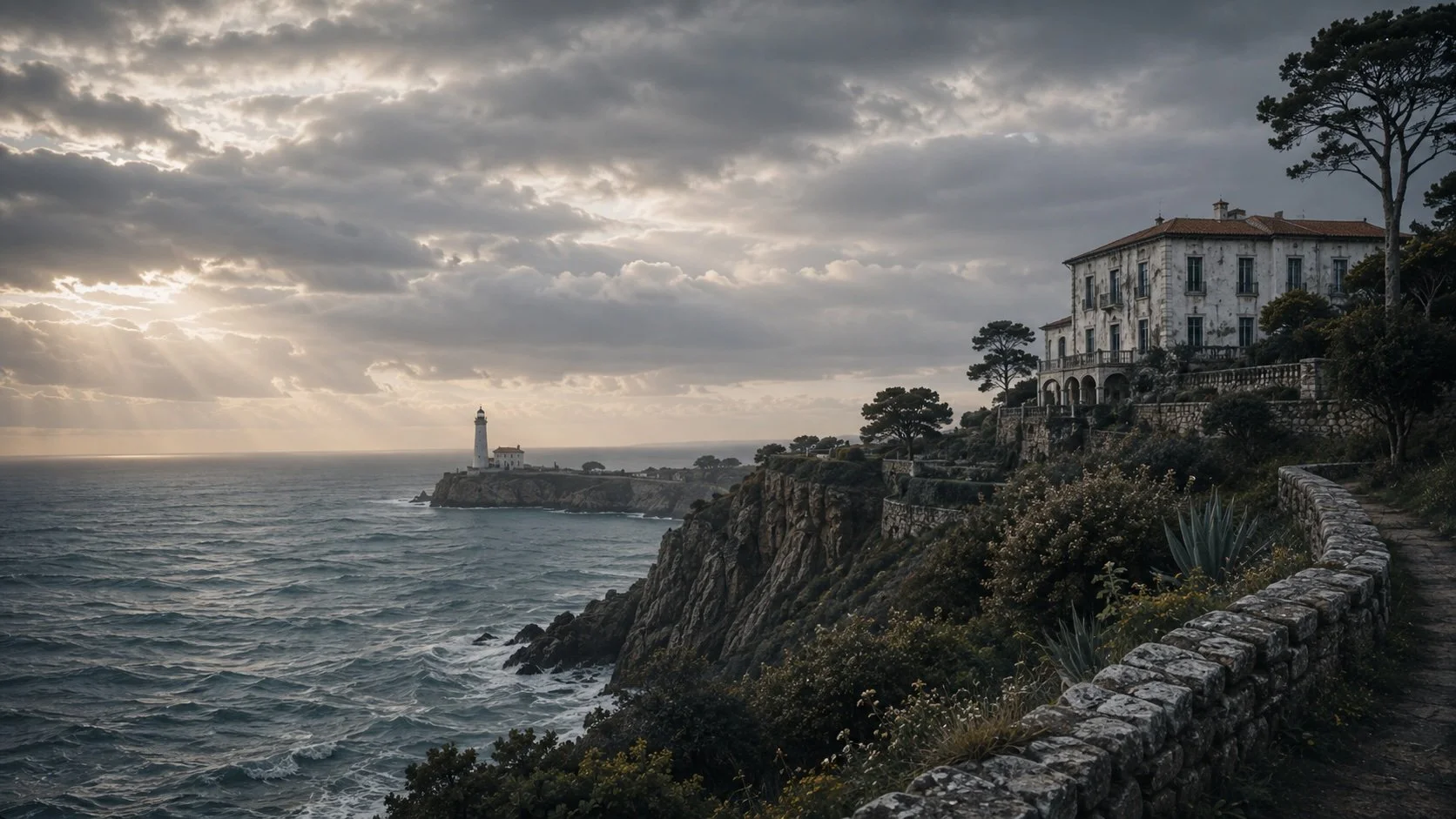
Some places let you pass through.
Some places ask you to stay.
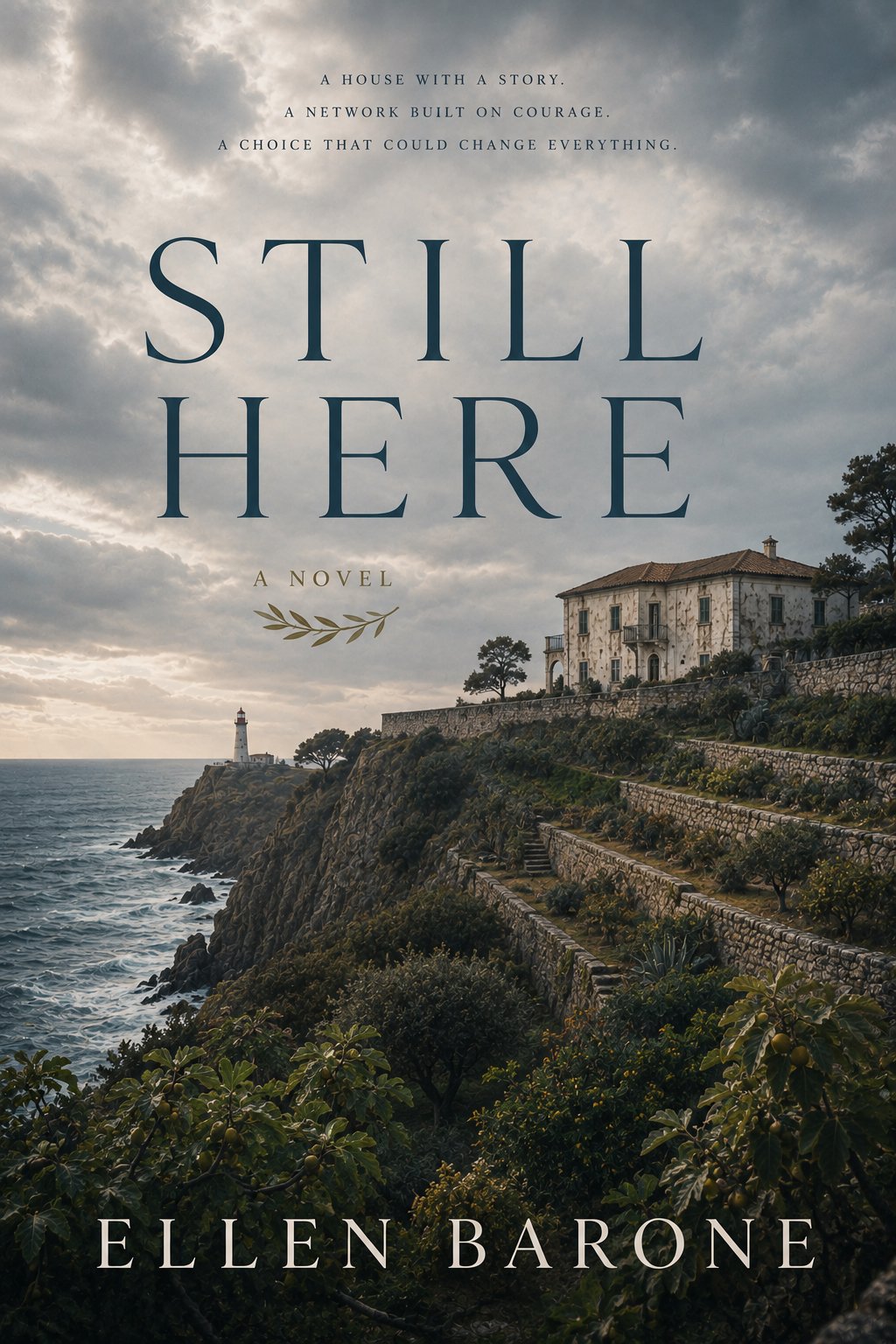
Working cover mockup for Still Here. Title and cover design may change during final editing and publication.
STILL HERE: A Novel
COMING 2027
Dr. Harriet Blackwood has spent twenty years interpreting other people’s histories — forty-seven sites, twelve countries, always moving on to the next project. When she inherits a Portuguese coastal villa from a woman she met only once, she expects an archive to catalogue and a history to interpret.
What she finds instead is an active sanctuary network — one that has protected displaced people for generations and now expects something from her in return.
And a seven-year-old girl who has claimed the lighthouse as her own.
Still Here is a novel about chosen belonging, moral responsibility, and what it costs to stay.
PERSONAL NOTE
For fifteen years, I have lived as a long-stay traveler. I have been welcomed into places, and I have left them. I have learned the lightness of transience and built a life around that freedom.
Over time, though, I found myself returning to a different question: what did that freedom actually mean, and who gets to have it?
Living as I have—welcomed and temporary, on visas with expiry dates, watching the calendar because the right to remain is fleeting—I have understood, in a small way, what it means to live somewhere conditionally. However much a place may feel like home, that feeling does not extend to the right to stay.
But my kind of conditional belonging comes with choices.
I have known people for whom borders represent something very different. People waiting for a hearing or a decision, knowing that permission and the right to remain somewhere, to return somewhere, even to ask for protection, can change with a law, a border, an election.
I couldn’t stop thinking about the distance between those realities. Not because they are equivalent, but because they exist in the same world. What does it mean to belong somewhere when the right to stay is not equally ours to choose?
Still Here grew out of that question.
For me, it took the shape of one woman, one coast, and a group of people brought together by a place of sanctuary.
Harriet has built her life around the freedom to move on. What she finds at Villa Marés asks something different of her: to stay.
I have lived with these characters for more than a year. I have come to admire their stubbornness and the quiet ways they care for one another. Somewhere along the way, Villa Marés stopped feeling like a setting and became a place I was reluctant to leave.
If you'd like to know when Still Here is available — and hear a little of the story behind it as publication approaches — I'd love to keep in touch.